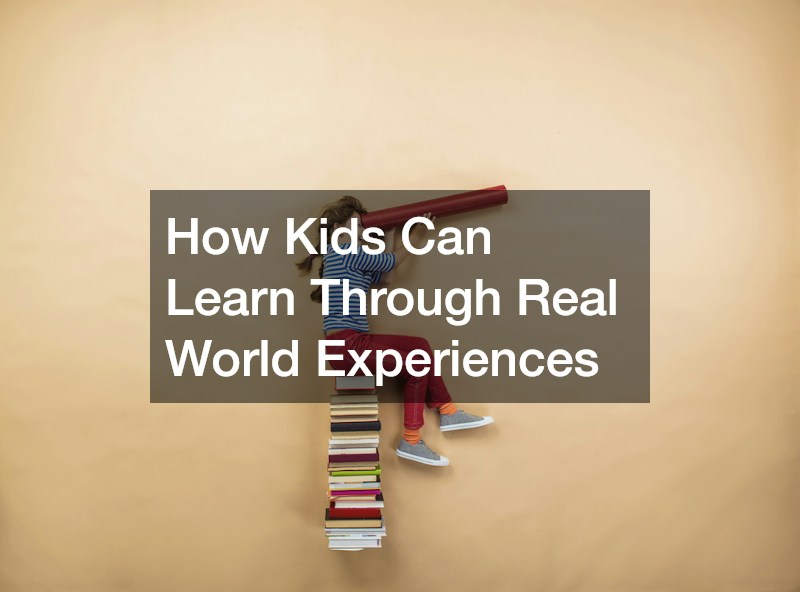
Children learn in many places beyond the traditional classroom. Everyday activities can give them opportunities to practice concepts they may encounter in school while developing communication, problem-solving, decision-making, and practical life skills. A trip, hobby, community activity, or family responsibility can become an educational experience when children are encouraged to ask questions and think about what they are doing.
Parents and educators can encourage this type of learning without turning every activity into a formal lesson. The goal is to give children opportunities to participate, observe, make choices, and reflect on what they discover.
Turn Recreation Into Hands-On Skill Building
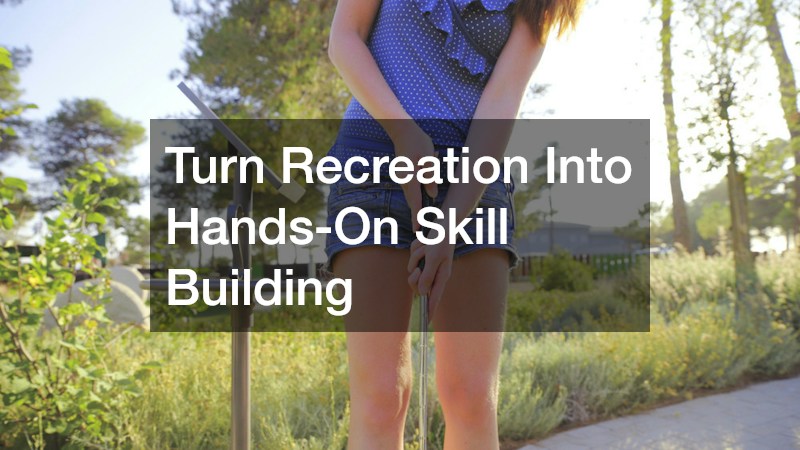
Interactive recreation can give children an opportunity to practice skills while doing something they genuinely enjoy. Activities involving virtual or simulated environments can introduce concepts such as distance, angles, measurement, coordination, and goal setting without making the experience feel like traditional schoolwork.
For example, using the best golf simulation can become an opportunity to explore basic mathematics and physics. A child might estimate how far an object will travel, compare results from different attempts, or consider how changing one variable affects the outcome. The activity can also introduce useful lessons about persistence because children can review what happened and try a different approach.
Parents can make the experience more educational by asking questions such as:
- What do you think will happen before you try?
- What changed between two attempts?
- How could you improve your next result?
- What information would help you make a better decision?
These questions encourage children to analyze their experiences rather than simply focus on winning or achieving a particular score. The same approach can be applied to many recreational activities.
Teach Organization Through Everyday School Technology
Technology provides another way for children to understand how information is organized and used. Even when children are not responsible for managing real school records, learning how information is categorized can introduce foundational concepts related to data, organization, accuracy, and privacy.
Student database management software offers a useful example. Parents and educators can explain that schools may need organized systems to keep track of information and retrieve it when appropriate. Older children can explore the basic idea of databases by creating a fictional collection of information, such as a library catalog or classroom inventory.
A simple activity might ask children to:
- Decide what information belongs in a record
- Group similar information together
- Identify duplicate or incorrect entries
- Create categories for easier searching
- Discuss why some information should remain private
These exercises can connect everyday technology to lessons in computer science and mathematics. They also encourage children to think carefully about accuracy. A small mistake in a record can affect how information is found or understood, making careful organization an important practical skill.
Build Healthy Habits Through Community Activities
Physical activity can teach children lessons that extend beyond fitness. Regular participation can help them understand consistency, personal goals, time management, cooperation, and the relationship between effort and progress.
A local fitness club may offer activities that expose children to different forms of movement in a structured setting. Parents can make these experiences more educational by encouraging children to set realistic goals and observe how their abilities change over time. The focus does not need to be on competition. Instead, children can learn how routines and practice contribute to gradual improvement.
Parents can encourage children to track:
- How often they participate
- Which activities they enjoy most
- Personal goals they want to work toward
- How they feel before and after activity
- Skills they would like to improve
This type of tracking introduces basic data collection while helping children become more aware of their own habits. It can also encourage them to take ownership of physical activity. When children have opportunities to choose activities they enjoy, exercise can become a regular part of their lives rather than simply another obligation.
Introduce Financial Thinking Through Everyday Decisions

Children can begin learning about financial concepts long before they have responsibility for managing significant amounts of money. Simple conversations about saving, spending, risk, and long-term goals can help them understand why people make different financial decisions.
A stock advisor can be used as a starting point for explaining what investing involves, particularly with older children. Rather than encouraging children to make actual investment decisions, parents can create a fictional portfolio and allow them to observe how hypothetical investments change over time.
A simple exercise could involve:
- Choosing several fictional investments
- Recording their starting values
- Tracking changes over several weeks
- Creating a basic graph
- Discussing why the values might change
This activity combines financial education with mathematics and research skills. Children can learn that decisions may involve uncertainty and that short-term changes do not necessarily determine a long-term outcome.
The goal is not to teach children how to become investors. It is to give them a basic framework for thinking about financial decisions, evaluating information, and recognizing that different choices can involve different levels of risk.
Connect Community Experiences With Accessibility
Children can learn important lessons about inclusion by observing how public spaces and services accommodate people with different needs. These conversations can help them understand accessibility, individual rights, community responsibility, and the idea that environments can create barriers when they are not designed for everyone.
Disability legal professionals can provide one example of how different professions work with issues involving rights and accessibility. Parents do not need to turn this into a complicated legal lesson. Instead, they can use everyday situations to help children think about why accommodations may be necessary.
For example, families can discuss:
- Why ramps and accessible entrances matter
- How captions help people access information
- Why public spaces may need accessible facilities
- How schools can accommodate different learning needs
- Why treating people fairly does not always mean treating everyone identically
An accessibility activity can also become a practical observation exercise. During a walk through a public area, children can identify features that make the environment easier or harder to use. This encourages them to consider experiences that may differ from their own and recognize that thoughtful design can make participation easier for more people.
Explore Different Learning Environments
Children can learn about education itself by seeing how different schools organize their classrooms, activities, and learning opportunities. Visiting schools, attending open houses, or researching educational approaches can help children become more thoughtful about what makes an environment engaging and supportive.
Exploring top private elementary schools, for example, can provide an opportunity to discuss differences in educational settings without presenting one type of school as universally better. Children can pay attention to how classrooms are arranged, what activities are available, and how students participate in lessons.
Encourage children to consider:
- Which activities seem most interesting
- How students interact with teachers
- What types of learning spaces are available
- Which extracurricular activities appeal to them
- What makes a classroom feel comfortable for learning
These observations can help children develop self-awareness. A child may discover that they enjoy hands-on projects, group activities, quiet reading, technology, sports, or creative work.
The experience can also teach children that educational environments differ and that learning preferences can change over time. Asking children to explain what they noticed helps develop communication and critical-thinking skills.
Explore Careers Through Creative Education

Career exploration does not have to begin with choosing a specific profession. Children can instead learn about the skills, interests, and activities associated with different types of work. This approach gives them room to explore without creating pressure to decide what they want to do in adulthood.
Beauty schools can provide an example of a setting where creative interests connect with practical and professional skills. Children can learn that careers involving personal services may require communication, technical knowledge, creativity, organization, and attention to detail.
Age-appropriate career exploration might involve:
- Researching what professionals do during a typical day
- Identifying skills used in different careers
- Interviewing an adult about their work
- Creating a project related to a career of interest
- Comparing several careers that involve similar skills
These activities help children recognize that careers are built around combinations of abilities rather than a single school subject. A child who enjoys art, for example, might discover connections between creativity and many different professions.
Keeping exploration broad allows children to develop interests naturally. The objective is to help them understand the world of work and recognize how skills learned today can be useful later.
Use Event Planning to Teach Creativity and Organization
Planning an event can turn an ordinary celebration into a practical lesson in budgeting, organization, design, communication, and decision-making. Children can participate in a simplified planning exercise even when adults remain responsible for the actual event.
Prom flowers provide one example of how a creative choice can involve practical considerations. A child could design a hypothetical floral arrangement while working within a fixed budget and considering factors such as color, quantity, and overall theme.
A simple project could ask the child to:
- Choose a theme
- Set a fictional budget
- Select several design elements
- Compare different options
- Explain why each choice fits the plan
This exercise shows children that creative decisions often involve constraints. They may have to decide which features matter most when they cannot have everything they initially want.
Event planning can also introduce sequencing. Children can identify what needs to happen first, what can happen later, and which tasks depend on other decisions. These practical planning skills can transfer to school projects, household responsibilities, and future activities.
Turn Pet Care Into Lessons About Responsibility
Caring for an animal can give children repeated opportunities to practice responsibility in a way that has immediate, visible consequences. Feeding, grooming, cleaning, and supervised training all require consistency rather than a one-time effort.
Dog training services can also demonstrate how communication and observation influence behavior. Children can learn that clear instructions, patience, repetition, and appropriate rewards can help reinforce desired behaviors. Adults should supervise these activities and assign responsibilities that match the child’s age and abilities.
Children can participate by:
- Keeping a simple training or care log
- Practicing consistent commands under supervision
- Observing changes in behavior
- Recording progress toward a specific goal
- Reflecting on what approaches worked best
These activities encourage children to notice patterns. They also teach that progress may take time and that changing an approach can sometimes be necessary.
Pet care provides an especially useful lesson because responsibility involves another living being. Children can begin to understand that commitments require regular attention even when they are busy, tired, or less interested than they were initially.
Teach Emotional Awareness Through Real-Life Support
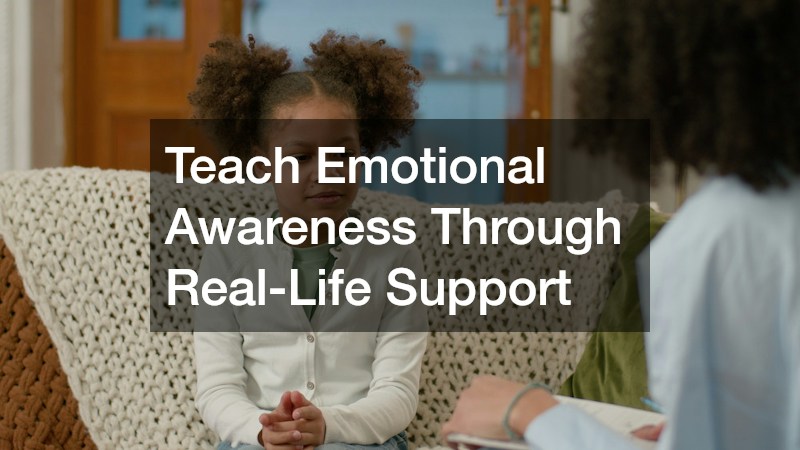
Real-world learning should include emotional and social development alongside academic and practical skills. Children benefit from learning how to recognize emotions, communicate concerns, manage everyday challenges, and understand when additional support may be appropriate.
Psychiatric services provide one example of professional support that families may encounter when addressing significant emotional or behavioral concerns. Parents can explain professional care in age-appropriate terms without making children feel that seeking help is unusual or shameful.
Everyday emotional learning can include:
- Naming different emotions
- Discussing what triggers particular feelings
- Practicing ways to communicate concerns
- Identifying healthy coping strategies
- Learning how to ask a trusted adult for help
Parents can also model these behaviors themselves. When adults talk calmly about emotions and demonstrate appropriate ways to handle frustration or disappointment, children gain examples they can apply to their own experiences.
The goal is not to make children responsible for solving every emotional challenge independently. Instead, real-world learning can help them recognize their feelings, communicate effectively, and understand that asking for appropriate support is a normal part of managing difficult situations.
Real-world experiences give children opportunities to apply ideas, develop practical skills, and understand concepts that may otherwise seem abstract. Recreation can introduce measurement and goal setting, while technology can demonstrate organization and data management. Community activities can encourage healthy habits, and simple financial exercises can introduce decision-making and risk.
Parents do not need to turn every activity into a formal lesson. Asking thoughtful questions, allowing children to make age-appropriate choices, and giving them opportunities to reflect can be enough to make ordinary experiences more meaningful. By looking beyond traditional classroom settings, families can help children discover that learning is not limited to textbooks, worksheets, or scheduled lessons. It can happen through participation, curiosity, practice, and the world around them.