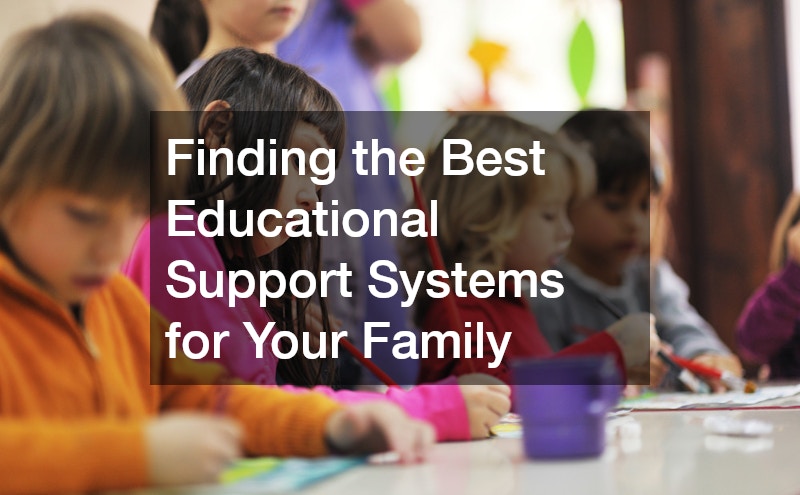
Raising a child is an extraordinarily rewarding journey, but it is also one of the most complex logistical and emotional undertakings a person can experience. It truly takes a village to foster a child’s academic, social, and emotional development. However, building that village in the modern world can feel completely overwhelming. Parents today are faced with a dizzying array of options, long waitlists, varying educational philosophies, and competing demands on their time and household budgets. From the moment an infant is born to the complex years of elementary school and beyond, identifying the right support networks is critical to your family’s overall well-being.
Many families approach this search under immense pressure, often rushing into choices out of pure necessity rather than long-term alignment. The risk of making hasty decisions is that children may end up in environments that do not nurture their unique learning styles, or parents may find themselves burned out by poor logistical setups. To protect your child’s happiness and keep your household running smoothly, you need a rational, long-term framework. This comprehensive, step-by-step guide walks you through the entire landscape of youth development and educational support, offering practical, actionable advice to help you build a bulletproof support system tailored to your family’s lifestyle.
Navigating the Earliest Years of Childcare

Finding the right care for your newborn or toddler is a deeply personal process that requires balancing strict health and safety standards with a warm, nurturing environment. During these foundational months, a child’s brain is developing at an astronomical rate, making consistent, responsive caregiving essential. For working parents, this phase is also a major logistical hurdle that demands careful scheduling and geographic planning to prevent daily commute fatigue.
When researching early facilities, look past flashy marketing materials and focus on the staff-to-child ratios, caregiver retention rates, and the cleanliness of the environment. A high turnover rate among teachers can disrupt an infant’s ability to form secure attachments, which are vital for early emotional regulation. Take the time to visit facilities in person during peak drop-off or pick-up hours to observe how current staff members handle stressful transitions.
Actionable Tips for Evaluating Infant Care
-
Map your daily commute limits realistically: Prioritize childcare facilities that sit naturally along your morning and evening commuting paths. Choosing an excellent facility that requires a forty-minute detour in the opposite direction of your office will rapidly lead to caregiver burnout.
-
Audit real-time staff-to-child ratios: Ensure the facility strictly adheres to, or exceeds, state-mandated ratios. For babies under twelve months old, an ideal ratio is one caregiver for every three infants, ensuring that your baby receives highly individualized attention and swift responses to their physical needs.
-
Visit dedicated facilities with specialized zones: Schedule formal tours at certified infant day care centers to inspect their sanitization protocols, safe sleep environments, and floor-time play areas. Ensure that non-walking infants have dedicated spaces entirely separate from older, more active toddlers.
-
Tap into local grassroots parent networks: Do not rely solely on internet search algorithms, as many excellent neighborhood options lack a large digital footprint. Ask trusted neighbors and local parenting groups for recommendations regarding vetted local infant care providers who offer exceptional, personalized nurturing.
Laying the Groundwork for Early Childhood Education
As children transition from toddlerhood into their preschool years, their developmental needs shift from basic physical supervision to intentional, structured early learning. This is the period where children develop foundational social skills, learn to share, build vocabulary, and practice emotional regulation within a peer group. Navigating this transition requires parents to understand the primary educational philosophies available, such as Montessori, Reggio Emilia, Waldorf, or traditional play-based learning.
Choosing the right early learning setting sets the tone for your child’s entire academic future. A positive, engaging experience builds natural curiosity and confidence, while an overly rigid or unstructured environment can cause early school anxiety. Focus on finding a classroom culture that aligns with your child’s natural temperament and curiosity.
Furthermore, take the time to evaluate how individual classrooms handle cultural diversity and inclusive learning. An environment that celebrates different backgrounds and learning paces teaches children empathy and global awareness from a highly impressionable age, turning them into compassionate classmates.
Actionable Tips for Choosing an Early Learning Center
-
Observe active classroom engagement dynamics: When touring potential schools, look closely at the children’s faces and behaviors. Are they actively exploring hands-on materials and interacting joyfully with peers, or are they expected to sit passively at desks for extended periods? Early childhood education should be dynamic and interactive.
-
Maximize geographic convenience with mapping tools: Utilize targeted digital mapping filters to pinpoint a reputable preschool near me. Finding a facility close to your home base makes it much easier to coordinate emergency pick-ups, participate in school volunteer days, and build playdate networks with families who live nearby.
-
Review safety and formal accreditation credentials: Investigate whether a program holds valid accreditations from respected national organizations, such as the National Association for the Education of Young Children. Checking these credentials ensures you are investing your resources into the best preschool available for your child’s development.
Assessing Structured Curriculum and Enrollment Options

Once you have narrowed down your choices based on location and core philosophy, it is time to look at the specific curriculum structures and daily schedules. A high-quality program should offer a balance of teacher-directed activities and child-led exploration. Look for a curriculum that builds foundational literacy, spatial awareness, and early mathematics skills through meaningful storytelling, building blocks, and sensory play rather than repetitive paper worksheets.
Parents must also consider how school schedules intersect with their employment obligations. Many excellent academic programs only operate on partial-day schedules, which can create massive logistical headaches for dual-income households if secondary afternoon care is not arranged well in advance.
Actionable Tips for Curriculum Evaluation
-
Evaluate the social-emotional learning framework: Ask administrators how their teachers handle peer conflicts, sharing disputes, and emotional tantrums. The curriculum should place just as much emphasis on emotional intelligence, kindness, and communication as it does on learning the alphabet.
-
Balance your family schedule with program duration: Compare the benefits of half-day schedules against full-day options. Ensure you understand how the hours of various preschool programs align with your daily professional workload to avoid constant mid-day scheduling crises.
-
Investigate community-oriented institutional alternatives: Explore early childhood classrooms that are organized by community groups or hosted inside a local church. These programs frequently offer highly supportive, community-centered environments with competitive tuition rates and excellent student-to-teacher ratios.
Bridging the Gap Beyond the Standard School Day

The standard school bell typically rings in the mid-afternoon, creating a significant logistical gap for households where parents work traditional business hours. Bridging this gap requires finding safe, enriching, and engaging care that extends the learning day without overwhelming the child with excessive academic pressure. Afternoon programs should offer a distinct change of pace from the formal school environment.
When these programs are executed properly, they do more than just fill time; they provide a vital social hub where children learn to navigate complex peer relationships outside of strict academic constraints. This unstructured socialization builds resilience and conflict-resolution skills that are highly beneficial in everyday life.
The best afternoon programs strike a careful balance between structured academic support, such as homework tutoring, and unstructured physical recreation. Children need an outlet to release physical energy after sitting in a classroom for several hours, making outdoor play spaces and sports activities a critical component of afternoon care.
Actionable Tips for Extended Afternoon Care
-
Prioritize safe and reliable transportation logistics: Look for programs that provide direct, supervised transportation from your child’s primary elementary school to the afternoon facility, or choose a program that operates directly on the school’s campus to eliminate transit risks entirely.
-
Seek well-rounded academic and physical enrichment: Select comprehensive after-school programs that provide dedicated homework help alongside physical activities, art projects, or music clubs, allowing your child to complete their assignments before returning home for the evening.
-
Streamline multi-child care at a single location: If you have children of varying ages, look for large, comprehensive family care centers that offer both primary early childhood classrooms and extended afternoon daycare services under one roof to simplify your daily pick-up logistics.
Maximizing Growth and Learning During Seasonal Breaks
When the school year concludes, families face the challenge of filling long summer months with activities that prevent academic regression while allowing children to enjoy their well-deserved vacation. The “summer slide” is a well-documented phenomenon where students lose critical reading and math skills over the break, making intentional summer planning a vital component of your family’s educational support network.
Summer breaks represent the perfect opportunity for children to step outside their comfort zones, discover new passions, develop independence, and make friends outside their immediate school circles. Whether your child is interested in science, competitive sports, wilderness survival, or the performing arts, there is a seasonal program designed to foster that interest.
Actionable Tips for Summer Care Planning
-
Create a balanced seasonal itinerary: Avoid over-scheduling your child with back-to-back high-intensity camps. Blend specialized enrichment weeks, like robotics or soccer clinics, with general recreational care weeks that allow for plenty of unstructured swimming and creative play.
-
Secure your enrollment slots during the winter: The most reputable summer camps fill their enrollment capacities months in advance. Begin researching options, building your seasonal family calendar, and paying your registration deposits as early as January or February to guarantee your child’s spot.
-
Monitor staff training and safety protocols: Inquire about the counselor-to-camper ratios and verify that the seasonal staff undergoes rigorous background checks and holds current certifications in first aid and CPR, ensuring your child remains safe during outdoor activities.
Managing Major Family Transitions and Emotional Hurdles

A child’s success in the classroom is deeply dependent on their emotional stability and security at home. When a family undergoes a major structural disruption, such as a parental separation or a divorce, a child’s academic performance and behavior can suffer dramatically. During these high-stress periods, the educational support system must expand to include targeted mental health and emotional coping resources.
Children express stress, grief, and anxiety in varied ways; some internalize their feelings and become withdrawn, while others exhibit intense behavioral outbursts and anger. It is essential for parents to separate the child’s painful emotions from deliberate misbehavior, providing unwavering support and clear boundaries as the family structure shifts.
Actionable Tips for Navigating Family Transitions
-
Establish perfect consistency across environments: If your family is transitioning into a dual-household structure, work hard with your co-parent to maintain identical rules regarding school nights, bedtime routines, homework expectations, and device screen-time limits to give your child a sense of predictability.
-
Maintain an open channel with school staff: Inform your child’s classroom teachers and school guidance counselors about major structural changes at home. This allows educators to monitor your child’s emotional baseline, extend academic grace when necessary, and provide a neutral, safe space during the school day.
-
Master compassionate behavioral de-escalation techniques: Educate yourself on positive parenting strategies regarding how to deal with an angry child after divorce, focusing your energy on validating their underlying sense of grief and confusion rather than reacting punitively to their emotional outbursts.
Conclusion
Building a comprehensive, reliable educational support system is an evolving project that changes as your children grow and your family’s life circumstances shift. There is no singular, universal path that works for every household; the key to success lies in identifying the unique developmental needs of your children and matching them with programs that respect your family’s values and logistical realities. It’s essential to stay flexible and open to adjustments along the way, as what works at one stage may need reevaluation later. Engaging with other parents and educational professionals can also provide valuable insights and resources to enhance your approach.
By taking a proactive, highly organized approach—whether you are researching early infant care, selecting a preschool curriculum, or guiding your children through difficult emotional transitions—you create a secure foundation for lifelong learning. The time and energy you invest in vetting these environments will pay massive dividends in your child’s confidence, happiness, and academic achievement. Stay patient, trust your parental instincts, and remember that every strong piece of support you put in place today helps build a brighter, more secure future for your family.